CategoriesMumbai 3.0

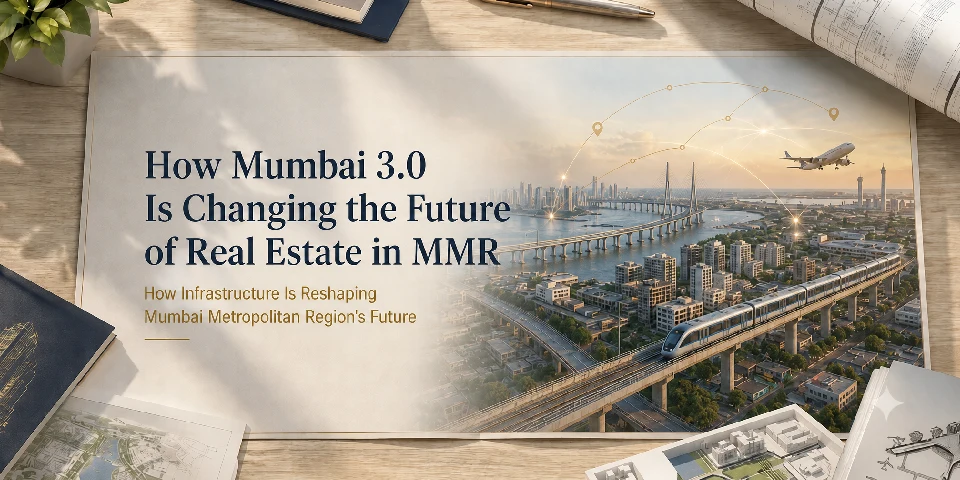
How Mumbai 3.0 Is Changing the Future of Real Estate in MMR

Ever had that conversation with a friend who says, “I want to buy a home in Mumbai, but honestly, I can’t afford anything near my office anymore”? You’ve probably had that exact thought yourself. If you’ve spent even ten minutes scrolling property listings lately, you already know the story prices in the city core are out of reach for most first-time buyers, and even seasoned investors are struggling to find real value.
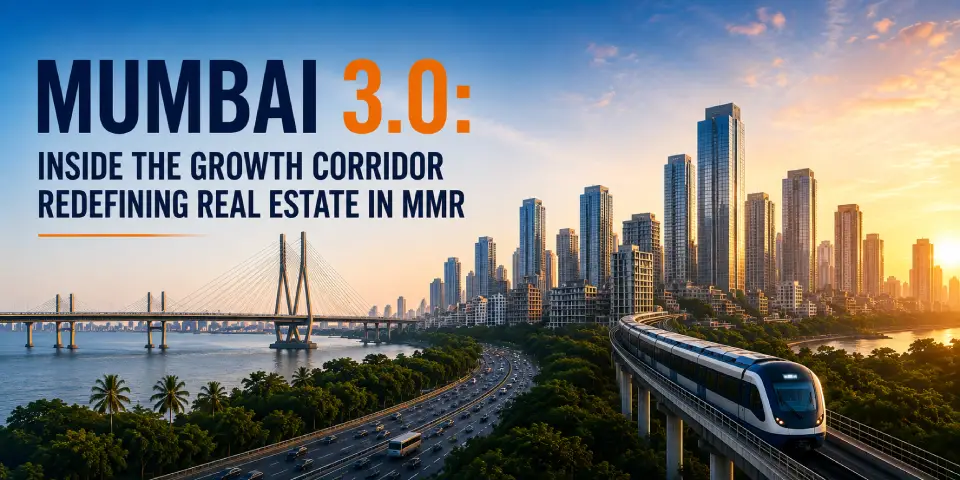
But here’s what most people miss: while everyone fights over the same overcrowded pockets of the city, a much bigger shift is quietly happening just outside it. It’s called Mumbai 3.0, and it might be the most important real estate story in the Mumbai Metropolitan Region (MMR) right now. Let’s break down what it actually means for you.

What Is Mumbai 3.0, Exactly?

Think of it this way. South Mumbai was the city’s original heart. Then came the suburbs, and later Navi Mumbai and Thane, as the city outgrew its own boundaries. Mumbai 3.0 is simply the next chapter in that same story.
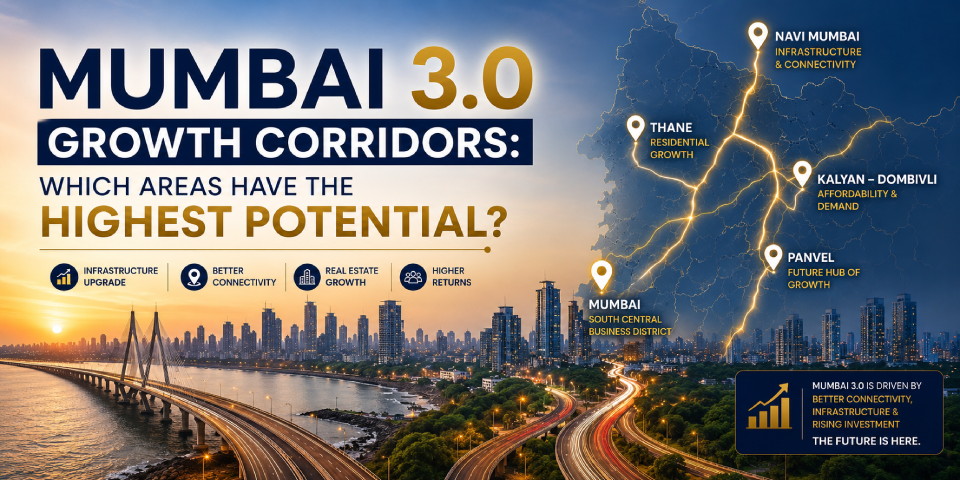
It’s not one official project with a signboard on it, and it doesn’t even have a fixed industry definition. It’s a term developers and planners now use for the next wave of growth across wider MMR places like Panvel, Ulwe, Karjat, Khalapur, Pen, and Alibaug. These areas were once “too far” to matter. Today, thanks to serious infrastructure upgrades, they’re becoming the region’s newest growth corridors.

Do this next: Stop thinking of Mumbai 3.0 as one location on a map. Think of it as the direction Mumbai’s next generation of homes, jobs, and investments are moving toward.

Why Is Mumbai 3.0 Happening Right Now?

You might be wondering, why now, and not five years ago? The honest answer is simple: Mumbai ran out of room to grow the old way, and connectivity finally caught up to make growing outward realistic.

Here’s what’s actually fuelling the shift:

  • Navi Mumbai International Airport (NMIA): A new airport doesn’t just move planes it moves entire economies, the way BKC grew around Mumbai’s original business district.
  • Atal Setu (Mumbai Trans Harbour Link): This 21.8 km sea bridge has already cut travel time between South Mumbai and Navi Mumbai, and it’s carrying tens of thousands of vehicles daily.
  • Virar–Alibaug Multi-Modal Corridor: A 126 km corridor connecting the northern and southern edges of MMR through integrated metro and road networks.
  • Railway and metro expansions: Making once-remote pockets a realistic daily commute for the first time.
The pattern worth remembering: real estate almost always follows infrastructure, not the other way around. Where the roads, bridges, and trains go, the homes and jobs follow soon after. That’s not a Mumbai-only rule, it’s played out this way in every major Indian city.

Do this next: If you’re evaluating a location for the next five to ten years, look at what’s being built around it, not just what’s already there today.

Which Mumbai 3.0 Corridors Should You Actually Watch?

Not every emerging area is created equal, and this is where a lot of first-time buyers get it wrong. Some corridors are already maturing; others are still in the early, “ground floor” stage.
  • Already gaining momentum: Panvel and Ulwe are closely linked to the airport ecosystem, with steadily rising demand from investors and end-users alike.
  • Still early, but promising: Dronagiri, Karjat, Khalapur, Pen, and Alibaug more affordable entry points that could reward patient buyers as connectivity improves.
A quick pros and cons view helps you think it through honestly:

Pros

  • Significantly lower entry price than Mumbai or even parts of Navi Mumbai
  • Strong long-term appreciation potential as infrastructure completes
  • Growing preference for plotted developments and planned communities over crammed high-rises
Cons
  • Some areas still lack schools, hospitals, and markets
  • Returns depend on project timelines actually being met, not just announced
  • Not every corridor grows at the same pace location matters more than the label

Do this next: Match your goal to the corridor’s stage. Want to move in soon? Lean toward areas that are already maturing. Investing for the long game? The early-stage corridors carry more upside, if you’re patient.

Is Mumbai 3.0 Actually the Right Move for You?

Here’s the bigger shift in how people are choosing to buy. It’s not just about a flat with four walls anymore. More buyers, especially younger ones want plotted developments and organised land communities that offer space, flexibility, and long-term value.
This is where Mumbai 3.0 changes the equation for you. Instead of competing for a compressed flat in a saturated market, you get to own land or a home in a planned, future-ready community, at a fraction of the cost, in a location that’s only getting more connected.

Do this next: Before you commit, ask any developer three things: who’s building the connecting road, when it’s scheduled, and what’s already been delivered on time. The honest answers tell you more than any brochure.

Where Anant Realty Fits Into This Story

This is exactly the shift Anant Realty has been building for. Rather than reacting to Mumbai 3.0 after the fact, our projects are designed around the same idea driving this trend planned, spacious, well-connected communities in the corridors that matter.
  • Anant Serene Park open, green, thoughtfully planned living spaces without giving up connectivity to the city.
  • Anant Serene Villas the space and privacy of a villa, with the long-term asset value organised plotted communities offer.
Each project is built around the same principle driving Mumbai 3.0 itself: get in early, choose a well-planned community, and let connectivity do the rest of the work over time.

The Bottom Line

Mumbai’s growth story has never really stopped, it just keeps moving to new ground. First the suburbs, then Navi Mumbai and Thane, and now the wider MMR corridors coming alive with Mumbai 3.0. If you’ve been priced out of the city core, that’s not bad news, it’s your opening. Look at where the infrastructure is heading, pick a location that matches your timeline, and choose a project built with that same long-term thinking in mind.
CategoriesMumbai 3.0

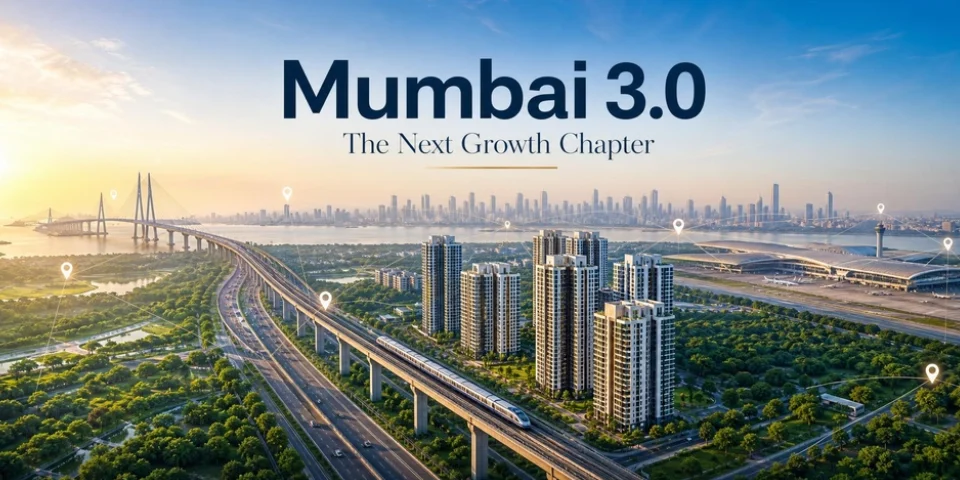
Mumbai 3.0: The Complete Guide to Mumbai’s Next Growth Chapter

Every few decades, a city outgrows the idea of simply expanding outward. It has to reinvent how it grows.Mumbai has reached that point.

Development once moved in a straight line from South Mumbai into the western and central suburbs, and eventually into Navi Mumbai. But rising property prices, traffic congestion, and shrinking land availability have made that linear pattern unsustainable. What’s replacing it is now widely referred to as Mumbai 3.0: a shift from one crowded core to a network of connected urban hubs, tied together by infrastructure like the Navi Mumbai International Airport, the Atal Setu, the Navi Mumbai Metro, coastal roads, and new expressways.

At the centre of this shift is Panvel and the wider Navi Mumbai region, where infrastructure, employment, and residential development are converging faster than almost anywhere else in the Mumbai Metropolitan Region (MMR).

This guide covers everything worth knowing about Mumbai 3.0, what it is, where it’s located, the infrastructure driving it, and what it means for anyone buying or investing here.

What Is Mumbai 3.0?

Mumbai 3.0 is the next phase of the Mumbai Metropolitan Region’s development — a move away from expanding one city endlessly, toward multiple interconnected urban centres where people can live, work, and access everyday services without depending on South Mumbai or the western suburbs.

It isn’t a single township or a government scheme. It’s a regional development vision, driven by large-scale infrastructure and planned expansion across Navi Mumbai, Panvel, Ulwe, Kharghar, NAINA, Uran, Pen, and Karjat.

In short: Mumbai 3.0 is where the next generation of Mumbai is being built and where developers like Anant Realty are already laying the groundwork.

Mumbai’s Evolution: From 1.0 to 3.0

Phase

Primary Growth Area

Development Focus

Mumbai 1.0

South Mumbai

Commercial and financial centre

Mumbai 2.0

Bandra, Andheri, Thane, Navi Mumbai

Residential suburban expansion

Mumbai 3.0

Panvel, Ulwe, Kharghar, NAINA, Uran

Infrastructure-led regional development

Each phase solved the problems of the one before it. Mumbai 3.0 addresses today’s biggest constraints: congestion, affordability, and the shortage of genuinely well-planned communities.

Where Is Mumbai 3.0 Located?

Mumbai 3.0 isn’t a single address, it’s a corridor. It spans the eastern and southern growth belts of the MMR, including:

  • Panvel
  • Ulwe
  • Kharghar
  • NAINA
  • Uran
  • Pen
  • Karjat
  • Taloja
  • Dronagiri

Of these, Panvel has emerged as the strongest residential and investment destination, thanks to its central position within nearly every major infrastructure project reshaping the region which is exactly why Anant Realty chose to build here.

The Mumbai 3.0 Map: A Connected Growth Corridor

Rather than picturing Mumbai as one city expanding outward, picture it as a network. The Mumbai 3.0 map is anchored by:

  • Navi Mumbai International Airport
  • Atal Setu (Mumbai Trans Harbour Link)
  • Navi Mumbai Metro
  • Mumbai-Pune Expressway
  • JNPA Port
  • Dedicated Freight Corridor
  • NAINA development region

These projects link residential neighbourhoods to business districts, logistics hubs, and transport networks creating a more balanced urban ecosystem than the old model of endless outward sprawl. As more of this infrastructure goes live, property values are increasingly set by connectivity, not by proximity to South Mumbai.

What Is the Mumbai 3.0 Plan?

The plan behind Mumbai 3.0 rests on one idea: build multiple self-sufficient urban centres instead of concentrating everything in one city. Its core objectives are to:

  • Reduce congestion in central Mumbai
  • Improve regional connectivity
  • Create new employment hubs
  • Encourage planned, organised residential development
  • Support sustainable, long-term urban growth

Instead of funnelling millions of commuters into one business district daily, Mumbai 3.0 distributes housing, offices, education, and healthcare across several connected locations, Panvel among the most prominent of them.

The Infrastructure Behind the Shift

A handful of mega-projects, all reaching completion within a short window, are what’s actually driving this transformation:

Navi Mumbai International Airport (NMIA): Set to become one of India’s busiest aviation hubs, generating employment and commercial, hospitality, and residential demand across Navi Mumbai.

Atal Setu: The Mumbai Trans Harbour Link has sharply cut travel time between Mumbai and Navi Mumbai, opening up the eastern corridor like never before.

Navi Mumbai Metro: An expanding network improving daily commutes and linking residential neighbourhoods to railway stations, business districts, and the airport.

NAINA Development: The Navi Mumbai Airport Influence Notified Area is one of India’s largest planned urban development zones, expected to anchor future residential, commercial, and industrial growth.

Together, these four projects form the backbone of Mumbai 3.0 and the same infrastructure that runs directly past Anant Serene Park and Anant Serene Villas in Wardoli.

What Comes Under Mumbai 3.0?

Panvel: Often called the gateway to Mumbai 3.0, combining strong connectivity, growing employment, education, and long-term residential demand. It’s also where Anant Realty has chosen to build.

Ulwe: Boosted by the airport and Atal Setu, now one of Navi Mumbai’s fastest-growing residential markets.

Kharghar: A mature, planned township with established institutions, business districts, and improving metro access.

NAINA Region: The largest future expansion zone, built around the airport.

Uran, Pen and Karjat: The next wave of expansion as infrastructure extends further outward.

Why Panvel Is the Heart of Mumbai 3.0

Among all these locations, Panvel holds a unique position: it touches nearly every major infrastructure project shaping the region, including the Mumbai-Pune Expressway, NMIA, Atal Setu, Navi Mumbai Metro, rail connectivity, and the NAINA growth corridor.

Unlike markets that are already saturated, Panvel still has room for genuinely well-organised residential communities which is precisely the gap Anant Realty built into. Rather than entering an already-crowded market, the developer identified Panvel’s long-term trajectory early and designed Anant Serene Park and Anant Serene Villas around it.

Anant Serene Park offers 2, 3.5 & 4.5 BHK residences in Wardoli, with direct access to the Mumbai-Pune Expressway, the railway network, upcoming metro corridors, and NMIA giving buyers an entry point into one of Mumbai 3.0’s fastest-growing residential pockets, backed by a modern, amenity-rich community.

Anant Serene Villas, in the same corridor, offers premium twin villas set around landscaped grounds, a grand clubhouse, and resort-style amenities low-density living paired with the same infrastructure access driving the rest of the region.

As more of this infrastructure comes online, both projects are positioned to benefit directly from Panvel’s continued transformation into one of Navi Mumbai’s leading residential hubs.

Anant Realty: A Decade-Plus of Building in This Corridor

Infrastructure creates opportunity, but it’s the developers who identify growth early and remain committed over the long term who help shape a region’s future. In Panvel’s case, Anant Realty has established itself as one of those developers.

Founded with a vision to create thoughtfully planned communities in Navi Mumbai, Anant Realty recognised Panvel’s long-term potential well before the term “Mumbai 3.0” entered mainstream conversations. Over the years, the company has delivered multiple residential developments and helped numerous families find homes in one of the region’s fastest-growing corridors.

That long-standing presence matters in a market driven by infrastructure-led growth. While many developers enter emerging locations once the spotlight arrives, Anant Realty has grown alongside Panvel’s transformation, consistently delivering quality homes and earning the trust of homebuyers through its focus on planning, timely execution, and customer satisfaction.

Year of Establishment

Experience

Completed Projects

Happy Families

2012

13+ years

7+

1000+

It’s this foundation over a decade of building, delivering, and staying rooted in the same growth corridor that underpins Anant Serene Park and Anant Serene Villas today. For buyers weighing Mumbai 3.0’s long list of emerging locations, that history is as much a part of the decision as the infrastructure itself: it’s one thing to buy into a growth story, and another to buy into a developer that’s already spent 13+ years proving it can deliver on one.

What Mumbai 3.0 Means for Homebuyers

Mumbai 3.0 is changing what buyers prioritise. Instead of paying a premium to stay close to the traditional city centre, buyers can now choose well-planned communities like those in Wardoli, Panvel that offer stronger connectivity, larger homes, and modern amenities, alongside more open space and better civic planning than many older neighbourhoods.

What Mumbai 3.0 Means for Investors

For investors, Mumbai 3.0 is one of the more significant opportunities in the MMR right now: infrastructure-led appreciation, expanding employment hubs, and comparatively low entry prices all point toward long-term capital growth.

But location alone doesn’t guarantee returns the developer matters just as much. A developer that understands the region’s long-term direction, and builds accordingly, tends to make the difference between speculative upside and sustained value. It’s this thinking that has shaped Anant Realty’s approach in Wardoli from the outset.

The Future of Mumbai Starts Here

Mumbai 3.0 is more than a buzzword; it’s a fundamental shift in how the city will grow over the coming decades. Instead of one overcrowded core, Mumbai is becoming a connected network of residential, commercial, and employment hubs. Panvel, Ulwe, Kharghar, and the wider NAINA region are no longer peripheral markets; they’re the foundation of what comes next.

For homebuyers and investors, understanding Mumbai 3.0 means understanding where demand, infrastructure, and opportunity are converging and Panvel sits squarely at that intersection. Anant Realty’s Anant Serene Park and Anant Serene Villas are part of that convergence, built not on speculation but on the same infrastructure story unfolding across NMIA, the Atal Setu, the metro, and NAINA.

Mumbai 3.0 will remain the central thread connecting every conversation about real estate in Navi Mumbai making it not just an investment theme, but the blueprint for the Mumbai Metropolitan Region’s future.

Enquire Now


    This will close in 0 seconds