
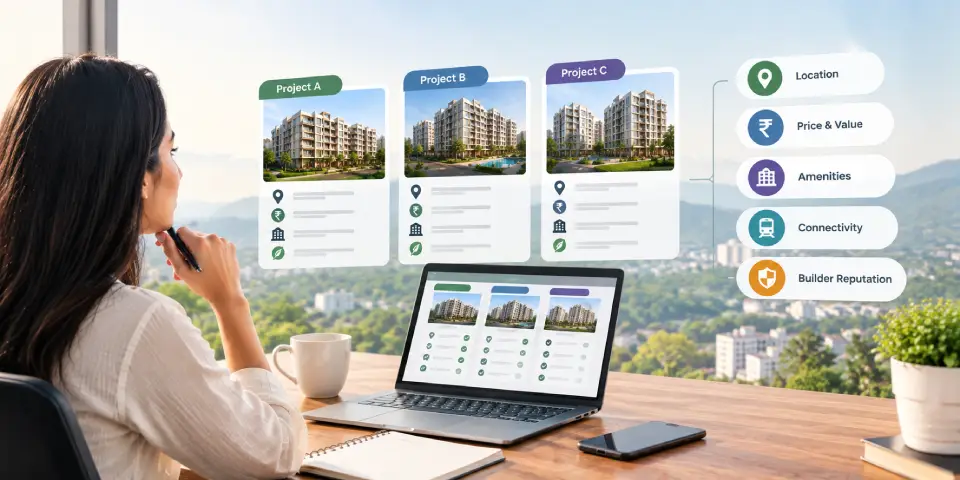
How to Compare Panvel Real Estate Projects Before You Buy
Panvel has quickly transformed into one of Navi Mumbai’s most active property hubs. Major infrastructure leaps like the Navi Mumbai International Airport, the Atal Setu, and expanding transit networks have triggered a fresh wave of new panvel real estate projects. However, abundance brings marketing noise. Nearly every brochure makes the exact same promises: prime locations, luxury amenities, and top-tier architecture.
Because every sales pitch sounds impressive, comparing properties on paper rarely works. The true quality of a home shows up in details marketing materials rarely highlight—such as tower density, usable carpet area, and whether amenities support daily routines or just look good in photos.
Here is a 7-step benchmark guide to evaluate residential projects in panvel before shortlisting your next home, using Anant Serene Park as a practical case study for how these factors play out in real life.
1. Location: Quick Commute vs. Daily Quiet
A solid location does two jobs at once: it cuts down your travel time while shielding your living space from heavy city noise.
- Transit Proximity: Measure actual drive times to the nearest railway station, highway, and airport rather than relying on estimated brochure distances.
- Noise Buffer: Check if the property sits directly on a roaring arterial road or if it is set back slightly to provide peace.
- Weekday Vibe: Visit the site on a busy weekday evening to gauge traffic density and ambient noise.
Practical Example: Look at how location planning functions at Anant Serene Park in Wardoli. Positioned right off the Old Mumbai-Pune Highway and just minutes from Mohape Railway Station, it offers rapid regional transit while remaining set back from main road congestion to preserve daily quiet.
2. Builder Track Record
Launch discounts are short lived; structural quality and legal clarity last decades.
- Delivery Discipline: Research whether previous real estate projects in panvel from the developer were completed on schedule.
- Aging Quality: Inspect an older project by the same builder to see how materials, paint, and common areas hold up over time.
- Legal Approvals: Verify clean land titles and clear RERA registration.
Practical Example: Established regional developers like Anant Realty lower buyer risk through transparent execution histories and verified RERA compliance across their panvel real estate projects.
3. Density and Master Planning
Buyers frequently evaluate flat layouts but ignore the overall master plan. Overcrowded towers on cramped land parcels lead to dark rooms, restricted ventilation, and long elevator wait times.
| Benchmark Metric | High-Density Project | Low-Density Planned Project |
| Tower Spacing | Narrow clearance, compromised privacy | Generous clearance, maximum airflow |
| Structure Height | Congested high-rises | Balanced low-to-mid-rise buildings |
| Open Space | Squeezed common areas | High ratio of green space per resident |
Practical Example: Instead of squeezing massive high-rise structures onto a tiny plot, Anant Serene Park features a low-density, low-rise configuration (G+7 to G+10 storeys). This design choice prioritizes natural light, cross-ventilation, and privacy over unit congestion a contrast to many dense property projects in panvel.
4. Practical Amenities vs. Bloated Upkeep
Long amenity lists often increase recurring monthly maintenance fees without adding genuine value to your family’s routine.
- Daily Wellness: Prioritize high-use features like a well-equipped gym, walking tracks, and open green areas.
- Community Features: Look for functional clubhouses, indoor game setups, and quiet sitting areas.
- Practical Utility: Verify essential modern additions like EV charging stations, solar backup, and on-site conveniences.
When reviewing panvel real estate projects, prioritize practical utilities over novelty features.
Like at Anant Serene Park we focus on high-utility spaces like its 6,000 sq. ft. Club Serene, dedicated sports facilities, EV charging points, and an entrance shopping plaza for everyday needs.
5. Usable Carpet Area Over Headline Price
A low starting price can hide an inefficient layout where long corridors, odd angles, and thick structural columns eat up usable space.
- Carpet-to-Built-up Ratio: Request the exact RERA carpet area breakdown.
- Functional Footprint: Measure usable wall-to-wall space in the living room, kitchen, and bedrooms.
- Sundeck Efficiency: Ensure balconies and sundecks provide functional outdoor seating rather than narrow cosmetic ledges.
- True Rate: Calculate property cost based on usable carpet area rather than quoted gross square footage.
Assessing layouts at Anant Serene Park shows how efficient planning works: homes are designed with wide sundecks and balconies that directly extend living areas, giving buyers genuine room efficiency compared to standard residential projects in panvel.
6. Surrounding Social Infrastructure
A property’s long-term comfort depends heavily on what is already running outside its boundary walls.
- Education: Distance to operational schools and universities.
- Healthcare: Drive times to multispecialty hospitals.
- Retail & Needs: Proximity to operational supermarkets and retail centers.
Practical Example: In the Wardoli micro-market, developments like Anant Serene Park sit within a short drive of established institutions like Delhi Public School, St. Wilfred’s College, Ch. Shivaji Maharaj University, and MGM Hospital. Accessing operational infrastructure right away is far safer than relying on speculative “proposed” developments common around other property projects in panvel.
7. Micro-Market Growth Corridor
Buying a home is also a long-term financial decision. Evaluate local growth drivers:
- Location relative to economic notification zones like NAINA.
- Proximity to upcoming infrastructure like the Panvel-Karjat rail expansion and suburban metro lines.
- Nearby commercial developments and logistics parks driving rental demand.
Practical Example: The Wardoli-Panvel belt falls directly within the NAINA influence zone and sits close to major transit corridors. This strategic positioning supports steady long-term capital appreciation and consistent rental demand, making properties here some of the best projects in panvel for home buyers and investors alike.
Quick Site-Visit Checklist
| Factor | Red Flag | Smart Standard |
| Location | Direct highway exposure with constant noise | Close to transit links, set back for quiet |
| Density | Overcrowded high-rises with blocked views | Low-density plan with open air & sunlight |
| Carpet Area | High square footage lost to long hallways | High carpet efficiency with functional sundecks |
| Amenities | High-upkeep showcase features rarely used | Practical, daily-use wellness and retail spaces |
| Infrastructure | Unbuilt, paper-only “future” proposals | Fully operational schools, colleges, and hospitals nearby |
Final Thought
When comparing real estate projects in panvel, look past launch promises and glossy rendering photos. Methodically evaluate location quality, builder delivery history, layout density, true usable carpet area, nearby social infrastructure, and future micro-market growth.
Using balanced, well-planned developments like Anant Serene Park as your benchmark makes it much easier to filter out marketing fluff and select the best projects in panvel for your long-term living needs.