
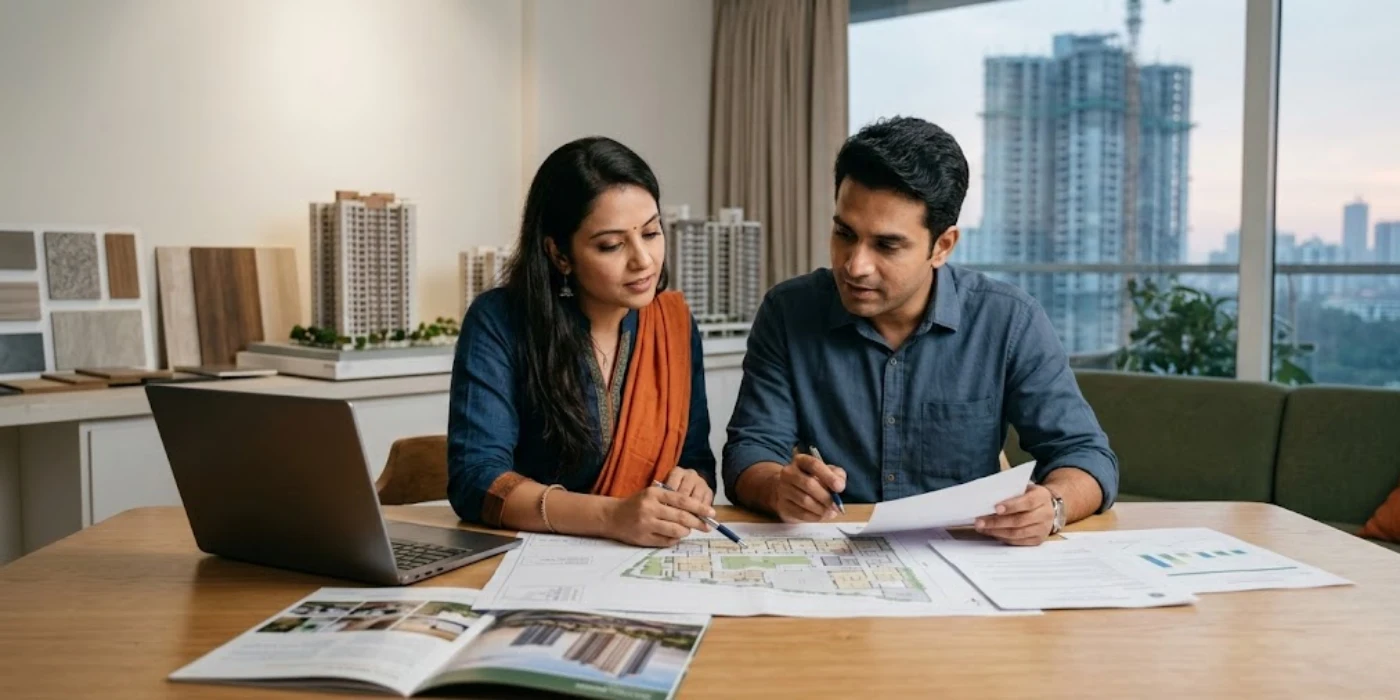
Buying a home is probably the biggest emotional and financial roller coaster you will ever ride. In a place like India, we do not just buy a house; we buy a piece of our future and a sense of security for our family. It is easy to get swept away by a beautiful sunset view from a 20th-floor balcony or a fancy clubhouse that looks like a five-star resort. But let us be real for a second. If you let your heart do all the talking without checking the math and the law, you might end up in a situation that feels more like a trap than a dream.
The real estate market in 2026 is moving fast, and the pressure to book a flat before the prices jump again is intense. People are constantly talking about new metro lines and upcoming airports, making everyone feel like they need to rush. But rushing is exactly where the trouble starts. To keep your investment safe and your peace of mind intact, you need to step back and look at the red flags that most people miss in their hurry. Here is a simple guide to the most common property-buying mistakes India sees today and how you can sidestep them like a pro.
Forgetting the actual on-road price
One of the most painful financial mistakes while buying a home is looking only at the base price in the brochure. Many people plan their budgets around that one big number and forget that the “extras” in Indian real estate can easily add another 15 or 20 percent to the cost.
- Always ask the sales team for a complete cost sheet that includes the floor rise premium and any preferential location charges.
- Remember to set aside a separate fund for stamp duty and registration, as these are major upfront costs that are usually not included in your loan.
- Do not forget the GST on under-construction properties, which can be a significant addition to your final payment schedule.
- Keep some cash ready for the corpus fund and advance maintenance deposits that builders usually collect at the time of possession.
Trusting verbal promises over RERA data
We have all met that charming salesperson who promises that the park will be ready by next year or that the metro station is just two minutes away. While they might be well-meaning, one of the biggest RERA mistakes property buyers make is taking these words as gospel without checking the official portal.
- Go to the state RERA website and look up the project registration number to view the sanctioned plans.
- Check the quarterly progress reports on the portal to see whether the building is moving at the speed the builder claims.
- Look for any recorded complaints or legal litigations on the RERA page that might indicate trouble with the developer or the land.
- Verify the exact carpet area mentioned in the RERA documents because that is the only space you are legally paying for at the end of the day.
Skipping a professional legal check
Many buyers assume that if a major national bank has approved a home loan for a project, the property must be legally clear. This is a very risky assumption to make with your life savings. Carrying out your own due diligence before buying property is the only way to sleep peacefully at night.
- Hire your own independent lawyer to check the title deed and ensure the land has a clear chain of ownership for the last thirty years.
- Ask for a fresh encumbrance certificate to make sure there are no old loans or legal disputes tied to that specific survey number.
- Check if the builder has the commencement certificate and all the necessary environmental clearances before you sign any agreement.
- If you are buying a ready property, never skip asking for the occupancy certificate because living in a building without an OC is technically illegal in India.
Ignoring the Reality of the Neighborhood
You might fall in love with a flat, but you have to live in the neighborhood. A common property-buying mistake that India buyers often commit is focusing so much on the four walls that they ignore the world outside the main gate.
- Visit the project site at different times of day to check actual traffic levels and see whether the street lights work at night.
- Research the actual timeline for any proposed infrastructure, such as new roads or bridges, rather than just believing what is written on the marketing map.
- Check for basic needs such as grocery stores, pharmacies, and good hospitals within a 5-kilometer radius of the project.
- Talk to people who already live in the area to find out about water supply issues or whether the locality floods during a heavy monsoon.
The goal of buying a home is to build a better life, not to add a mountain of stress. If a deal feels too good to be true, it usually is. Take your time, do your homework, and do not let anyone pressure you into a decision you are not ready for. When you follow these steps, you are not just buying a house; you are securing your future.
Avoid the common mistake, read more, and stay connected with us as we bring you more honest advice to help you navigate the world of Indian real estate. We are here to make sure your journey to home ownership is as smooth as possible.