
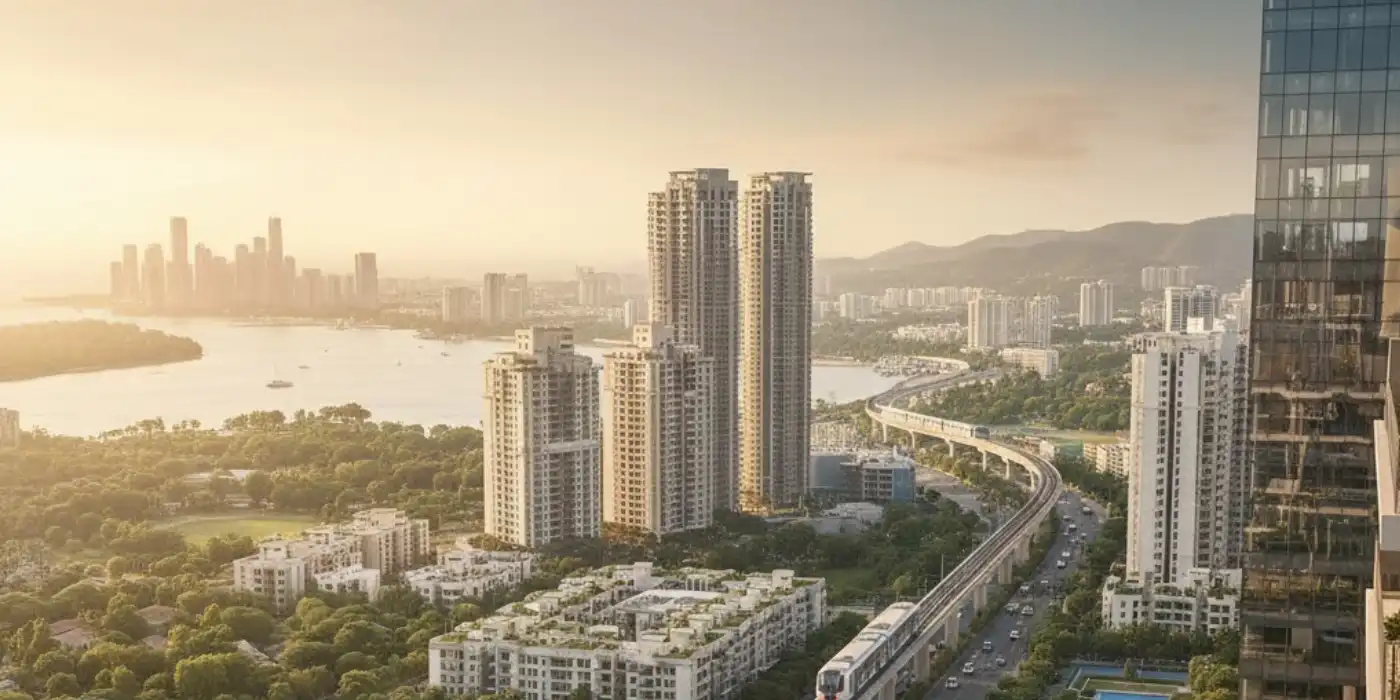
Buying a home today has become challenging due to rising prices, limited space and unclear long-term returns in traditional city markets. Many buyers struggle to find locations that balance affordability with future growth. This is where property in Navi Mumbai stands apart.
With planned infrastructure, improved connectivity and organized urban development, the region offers a practical alternative to overcrowded city living. The growing demand for flats in Navi Mumbai signals increasing buyer confidence.
As infrastructure projects reshape the region, several locations are emerging as the best areas to buy property in Navi Mumbai. This blog helps you identify those areas and understand where smart investment decisions begin in 2026.
Why property in Navi Mumbai is gaining so much attention
The need for property in Navi Mumbai is increasing due to a combination of strong infrastructure and lifestyle benefits. With the operating Navi Mumbai International Airport, Metro Line 1 and Mumbai Trans Harbour Link, connectivity has never been more convenient.
Additionally, affordable housing in Navi Mumbai and modern facilities, well-planned layouts and proximity to major employment hubs make it ideal for investors and families.
The rising demand for rental housing and the future growth prospects make it attractive and make Navi Mumbai an excellent option for those looking to buy a home.
Top 10 best areas to buy property in Navi Mumbai
1. Panvel
Panvel continues to be one of the most attractive destinations for buyers looking for growth and value.
- Price Range: ₹6,500–₹8,500 per sq. ft.
- Growth Trend: Around 74 percent appreciation in four years
- Infrastructure Advantage: Airport proximity, Mumbai–Pune Expressway, Panvel–Karjat rail corridor
Panvel offers some of the most promising flats in Panvel for buyers entering the market early. Its location near major transport corridors makes it ideal for both living and investment. Know – why Panvel is Asia’s most exciting real estate growth
2. Kharghar
Kharghar combines established social infrastructure with future growth drivers.
- Price Range: ₹8,000–₹10,000 per sq. ft.
- Connectivity: Operational metro, highway access
- Rental Demand: Strong demand from families and professionals
It remains one of the best areas to buy property in Navi Mumbai for buyers who want stability with gradual appreciation.
3. Ulwe
Ulwe is emerging as a high-growth residential zone due to airport-linked infrastructure.
- Airport Access: 10 minutes from the international airport
- Connectivity: Coastal road and MTHL access
- Growth Outlook: High appreciation potential
Ulwe attracts buyers looking for early entry into future-ready locations offering affordable housing in Navi Mumbai.
4. Vashi
Vashi is one of Navi Mumbai’s most established commercial and residential hubs.
- Price Range: ₹12,000–₹15,000 per sq. ft.
- Rental Demand: Consistently high
- Connectivity: Excellent rail and road access
It is ideal for buyers seeking ready infrastructure and strong rental returns through flats in Navi Mumbai.
5. Nerul
Nerul offers a balance between premium living and connectivity.
- Price Range: ₹11,000–₹14,000 per sq. ft.
- Key Roads: Palm Beach Road access
- Rental Yield: 3–5 percent annually
Nerul remains a dependable choice for steady investment in property in Navi Mumbai.
6. Taloja
Taloja is known for budget-friendly housing backed by metro connectivity.
- Price Range: ₹7,500–₹8,850 per sq. ft.
- Metro Access: Line 1 operational
- Growth: Around 20 percent yearly appreciation
It is a preferred destination for first-time buyers exploring affordable housing in Navi Mumbai.
7. CBD Belapur
CBD Belapur stands out for its commercial strength and rental performance.
- Price Range: ₹9,500–₹12,000 per sq. ft.
- Rental Yield: Among the highest in Navi Mumbai
- Demand Drivers: Offices, government hubs
This location is often listed among the best areas to buy property in Navi Mumbai for rental-focused investors.
8. Airoli
Airoli caters strongly to the IT and corporate workforce.
- Price Range: ₹10,000–₹13,000 per sq. ft.
- Employment Hub: IT parks and offices
- Future Growth: Upcoming metro connectivity
Airoli supports long-term demand for flats in Navi Mumbai driven by job stability.
9. Seawoods
Seawoods offers premium living with complete infrastructure already in place.
- Key Landmark: Seawoods Grand Central
- Connectivity: Rail and road integration
- Lifestyle: Ready-to-move developments
It is suitable for buyers who want immediate possession and lifestyle comfort in property in Navi Mumbai.
10. Kamothe
Kamothe remains a mid-segment residential market with steady growth.
- Price Range: ₹11,000–₹13,000 per sq. ft.
- Connectivity: Well-linked to Panvel and CBD Belapur
- Buyer Profile: Families and end-users
It fits buyers looking for balanced pricing and long-term appreciation among the best areas to buy property in Navi Mumbai.
How infrastructure development is driving property in Navi Mumbai
Airport-led regional growth
The growth of property in Navi Mumbai can largely be attributed to the new Navi Mumbai International Airport. The improved air connectivity has constantly relied on Mumbai city while positioning itself as a self-sustained urban centre.
Metro and road connectivity impact
The metro network’s expansion and the upgraded roads have drastically reduced travel times across the region. Greater connectivity has made commutes more convenient for residents, boosting the popularity of flats in Navi Mumbai in the eyes of professionals working in the city.
Impact of MTHL Setu
The MTHL Setu project has cut travel time from 30 to just under minutes, transforming once remote locations into highly-connected residential hubs offering a higher quality of living and longer-term growth in price.
Why Navi Mumbai offers sustainable and affordable housing options
Navi Mumbai’s planned growth will provide affordable housing in Navi Mumbai through well-organized designs, modern amenities and green areas. The balanced pricing, the robust infrastructure and consistent demand for rental properties make these houses suitable for first-time homebuyers and investors looking for long-term and functional living options.
Is 2026 the right time to buy?
2026 is a unique time when major infrastructure is in operation and prices haven’t been fully adjusted to the long-term possibilities. Protection for buyers under MahaRERA and the increased participation of well-known developers and the strong demand for rentals lower the risk of investment.
If you’re thinking of apartments or flats in Panvel, Kharghar or Ulwe, the cycle of growth is well underway.
Conclusion
For buyers seeking value, safety and long-term returns, property in Navi Mumbai stands out as one of the strongest real estate opportunities in India today. With planned development, reliable infrastructure and better affordability than Mumbai city, Navi Mumbai offers a future-ready lifestyle.
From budget-friendly zones to premium neighbourhoods, flats in Navi Mumbai cater to every buyer profile. As infrastructure projects reach maturity, the upside potential continues to grow. If you are planning to invest or buy a home, the opportunity is not in the future, it is already here.
FAQs
Which are the top-ranked localities to buy property in Navi Mumbai in 2026?
The top areas include Panvel, Kharghar, Ulwe, Vashi, Nerul, Taloja, CBD Belapur, Airoli, Seawoods, and Kamothe. Each offers a unique balance of affordability, lifestyle, and investment potential.
Why is Panvel considered the top choice for property investment?
Panvel offers a high appreciation potential (74% in the last four years) and is priced competitively at ₹6,500–₹8,500 per sq. ft. Its proximity to the upcoming airport and the Mumbai-Pune Expressway makes it a strategic hub.
Which locality in Navi Mumbai is best for rental returns?
CBD Belapur and Vashi are noted for having some of the highest rental yields due to their status as commercial hubs. Nerul also offers steady rental yields of 3–5% annually.
What makes Navi Mumbai a better choice than Mumbai city for homebuyers?
Navi Mumbai offers planned urban layouts, more green spaces, larger homes for the same budget, and modern social infrastructure, all while being better connected to Mumbai than ever before via the MTHL.